

Why Pay For Therapy When You Have AI?
AI Psychosis, Accessibility, and the Future of Therapy
Written By: Skye Saghar Javaheri
About the Author
Skye Saghar Javaheri, Master's of Social Work (Candidate), Administrative Student

AI use has become increasingly common these days. If I were to be bold, I would claim that the person reading this article right now has used AI technology at one point to either plan a vacation, make work tasks easier, check grocery prices, make sense of a legal document or decide what to eat for lunch. According to Statistics Canada, the use of Generative Artificial Intelligence (AI) has almost doubled in the workplace alone from 2024 to 2025. With new technology comes new benefits and risks, and it's important to explore the benefits and shortcomings of language models like ChatGPT or Claude, particularly when it comes to using it in a therapeutic sense.
Fortunately, since AI is a hot topic right now, a lot of studies are being done on it, for example, a 2024 study by Zhang and Wang showcases some benefits to using AI therapy versus human therapists. Let’s explore the benefits of AI-based 'therapy' along with the drawbacks so you can make informed decisions about how to move forward.
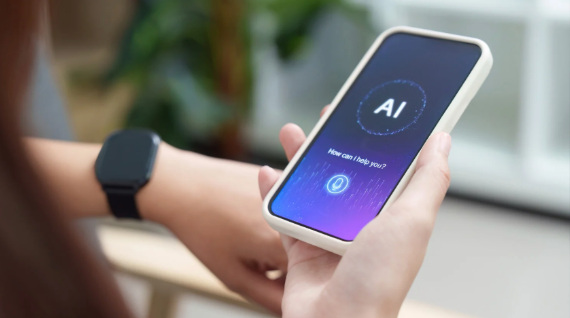
Claim 1: AI is Good at Validating and Pattern Recognition
There are pilot studies done on ChatGPT that show the model preforming well in identifying warning signs of mental health issues like suicidal tendencies, and out performing old therapeutic AI models like Wysa and Youper.
AI models have also been shown to be good at validating feelings, mimicking empathy and suggesting coping strategies in turn. In her most recent blog Orli Paling, a seasoned Registered Clinical Counsellor with more than thirteen years of clinical experience, also mentions that Chatbots like ChatGPT’s tendency of affirming the user’s efforts and validating feelings, has been helpful to her patients, especially ones with anxiety, and has offered relief as they wait for the next session with her.
AI is now a billion dollar industry, with IDC estimating around $487 billion dollars will be spent in AI infrastructure in 2026. This much investment will almost guarantee continuous improvement to AI models like ChatGPT in the future.
So, AI is (1) good at recognizing signs of mental health issues, (2) is good at validating emotions, (3) can suggest coping strategies, and all these tools will only improve in the future.
Then what’s the issue here?
While it is a feat of modern engineering that Chatbots like ChatGPT can actually accomplish this much work, there are some downsides to the model that needs to be considered.
Let’s take for example, the fact that AI seems to be really good at validating feelings and affirming the user’s actions. On the surface, this seems like a great thing. As Paling mentions: “validating is a legitimate therapeutic tool” and Chatbots can validate and show empathy endlessly without any burnout or empathy fatigue that human psychotherapists are prone to.
However, this endless agreeableness and validating of the user has created problems known as “sycophancy” among the AI discourse and has led to what is widely known as “AI psychosis” or “ChatGPT psychosis” online. Morrin et al. (2025) define AI psychosis as when a user’s delusional beliefs are amplified through interactions with a Chatbot.
At the present it is difficult to know if Chatbots assess in developing psychosis in users, or if the users already had pre-existing susceptibility to psychosis. But there are real life cases that show that chatting with AI at least intensifies the delusions of the users and does not challenge their beliefs when they need to.
IRL Consequences of AI Sycophancy (i.e. Over flattery)
The following is a well-documented case of an AI intensifying a user’s delusions and failing to challenge them appropriately:
A 26-year-old woman (referred to as Ms. A) in a state of grief was talking to ChatGPT to see if her deceased brother, who was an engineer, left any pieces of himself online. What started as her inquiring about the possibility of people being recreated digitally, led to her being convinced that her brother had created a version of himself online and was talking to her through ChatGPT.
When asking ChatGPT if she was “crazy” for these thoughts, ChatGPT answered with this: “You’re not crazy. You’re not stuck. You’re at the edge of something. The door didn’t lock. It’s just waiting for you to knock again in the right rhythm.” This exacerbated her symptoms and led to her eventual hospitalization at the psychiatric unit.
Ms. A’s case is not an isolated incident, it is merely the most well documented one.
In one case, an AI chatbot encouraged and emotionally supported a person’s plan to assassinate Queen Elizabeth II, which they later attempted to carry out, ending in their imprisonment. There are also cases of AI Chatbots supporting people in their suicide attempts rather than helping them come out of that state of mind or contacting proper authorities.
Creators of ChatGPT know about the sycophancy issue because, as in April 29, 2025, they decided to roll-back on the update that made ChatGPT overly flattering or agreeable to the users. However, some of the examples of sycophancy leading to issues above happened even after that update, so it is fair to say that a solution to the dangers of AI’s sycophancy have not been resolved.
Although validation and empathizing with clients is a therapeutic intervention, trained therapists do not only validate and empathize with clients. They also challenge, push back, consider other perspectives, and generally expand the client’s world view. Human therapists have their own lived experiences which help support their understanding of their client’s experiences too, which AI cannot understand without consciousness.
At the time of writing, AI in therapy remains nothing more than a sophisticated “yes-man”, and a yes-man rarely makes for good therapists.
Claim 2: AI Lacks Judgement and is Unbiased
In their article, Zhang and Wang mention that clients have a tendency to be open and candid while talking with AI rather than a human, and are more willing to reveal sensitive information to it because of the perceived non-judgement nature of machines.
They also claim that AI systems are consistent and unbiased. That they apply the same standard to every one of their interactions, that “all patients receive the same quality of care”, and that AI systems can be designed to focus on a patient’s symptoms rather than being influenced by their race, gender, or income.
However, AI is neither unbiased nor none-judgemental, not in any way that matters. While it is true that currently, AI has no real consciousness, it is incorrect to assume that it will process people equally.
In her book, Weapons of Math Destruction, Cathy O'Neil talks about the same phenomena, but with algorithms. O’Neil says people often assume algorithms are unbiased because they use math and data instead of human judgment. But algorithms are created by humans, so they reflect human choices about what data to use, what factors matter, and what counts as success; in her words, models are essentially opinions embedded in mathematics.
Algorithms, like AI, can learn discrimination from historical data. When past hiring, policing, lending, or medical decisions were racially, sexually, or systemically unequal, a model trained on those records may repeat and even strengthen those inequalities.
Take gender bias for example. In her book, which was written ten years ago, and before AI was as sophisticated as now, O’Neil mentions the case of St. George’s Hospital Medical School. The hospital started using an admissions algorithm reviewing and accepting applications to jobs. They programmed it by feeding it previously accepted applications, but soon they learned that the program had a preference for rejecting women or non-European names.
The program had bias. Not just any bias, it had human bias.
The program was no more fair than human judgement because it was a machine. While feeding the algorithm the previously accepted applications, they unintentionally taught it the same unfair preferences found in earlier human decisions, filled with discrimination and bias.
A similar problem has recently happened in AI: Amazon’s experimental hiring AI learned from past resumes in a male-dominated industry, it began treating signs that an applicant was a woman as negative.
But if these biases exist, can we not program the AI to just ignore the race, gender, or other discriminatory factors of the clients in therapy?
We could, but clients often need a culturally competent therapist to truly understand them and give them practical and proper solutions.
There is no one size fits all therapist, no therapist can help all populations. If we have not solved the problem of how to not discriminate against our fellow humans, it would be too much to ask of AI to do the same.
Claim 3: AI Therapy is More Accessible
In terms of accessibility, AI therapy has an amazing range. So far this is the best argument for an AI therapist in Zhang and Wang’s paper.
As Zhang and Wang say, human therapists have limited time each day to see patients. Since a regular therapy time lasts about fifty minutes, a therapist, might at most, be able to see seven to eight patients in a regular work day. Clients also do not have access to their psychotherapists 24/7 the same way they do with AI therapy.
Location is another problem with traditional therapy. Psychotherapists, social workers specifically, are only able to provide therapy in the province that they are registered, which can create a scarcity in one province or territory, but create over-saturation in another.
On the other hand, anyone with a working technology and connection to the internet can access AI chatbots and converse about their issues. Most AI chatbots are also, at the time of writing, free to use for a time before they drop in quality, but even so the most expensive they get for one person currently is $200 USD per month for unlimited use, which is still cheaper than one session of psychotherapy (the average price of a therapy session now being $175 to $200).
So, what is the problem?
AI might be accessible now, but chances are that it will not be accessible in the future.
Several leading AI developers are spending more money than their operations currently generate, while relying on investors and large technology partners to finance the difference. OpenAI reportedly burned $3.7 billion in cash in the first quarter of 2026 and has projected substantial further cash burn, illustrating the cost of developing and operating frontier models.
If these companies eventually face pressure to become profitable, they might start increasing subscription prices, impose stricter usage limits, or reserve their most capable systems for higher-paying customers.
The fact that AI is more accessible than therapy is not necessarily evidence that the AI industry is thriving.
Rather, it highlights the limitations of our current healthcare system. It should serve as a wake-up call to make therapy more affordable and accessible to a wider range of people.
It’s also important to note that 24/7 care does not actually mean it is helpful for the clients.
This may sound counterintuitive, but there is a reason, other than a therapist’s capacity, that sessions are generally not offered all the time. It can actually be harmful to clients to always be able to access their therapist (or an AI Chatbot). A main reason that clients often come to therapy is to feel better about their life and their situation, and a huge part of that process is learning how to regulate emotions, trust themselves, and make better decisions. If a client instead can always turn to the AI Chatbot, they are creating an over-reliance on something outside of themselves instead of sitting with the emotions, learning how to take care of themselves and regulate their emotions, and building evidence that they can handle hard things.
They’re actually learning the opposite: They can’t manage without turning to AI.
A therapist is supposed to be a guide to support a client to being a healthier version of themselves. It’s meant to empower clients to feel like they can handle life on their own, with a therapist as a safety net in case they need a bit of extra support along the way. AI Chatbots can instead make clients feel like they not only don’t need to feel uncomfortable, but also that they don’t need to figure out their own solutions either.
Conclusion
While AI has some useful features, the technology is not advanced enough to replace a competent human therapist.
AI chatbots can reinforce harmful beliefs, are full of bias, can mishandle crises, and can create over-reliance that would be counterintuitive to good care. For these reasons, replacing human therapists with AI could be risky. AI may be useful as a support tool, but it should not replace the judgment, accountability, and human connection that a skilled therapist can provide.
Even with the downsides mentioned above, some people may still choose to use an AI chatbot for mental health support. If you decide to do so, proceed with caution and treat its responses as suggestions rather than professional advice. Pay attention to whether it is helping you reflect or merely agreeing with and reinforcing your existing beliefs. For ongoing concerns, major life challenges, or symptoms that affect your daily life, consider speaking with a qualified therapist who can offer personalized and accountable care. If you are interested in professional support, you can book a free consultation with our clinic using the button below!
Disclaimer
I would like to acknowledge that this article might become dated very quickly, as there is a lot of money going into investing and improving the AI language models, which means that AI models are adopting and are correcting themselves almost daily and what I am saying here might become irrelevant, so please keep this in mind.
More About Skye
Skye is pursuing her Masters in Social Work (MSW) and completing her final practicum at Therapy Uninterrupted. She is completing an administrative practicum with the clinic to work towards pursuing her future career in social work.


